
More Than Physical Therapy: Taking Care Personally
Physical Therapy, Treatments By PRO~PT

Neck pain is very common—most people will experience neck pain at some point in their lifetime. The most common causes of neck pain are associated with poor postures that we assume throughout the day. Since many of us sit for a large portion of our day, it’s even more important that we do so with good posture.
Neck pain when sitting or doing any other activity can present in a variety of ways:
If you’re experiencing neck pain while sitting, physical therapy can help. Keep reading for more information on neck pain when sitting, how to develop proper posture, and exercises that can help.

An incorrect posture while sitting may result in back and neck issues in the short-term, and can lead to chronic issues in the future. The most efficient way to self-manage neck pain is by preventing the overstretching and stressing of the tissues in our neck, back, forearms, and wrists. Once neck pain appears, an incorrect sitting posture will often prolong it and make it worse. Taking the time and effort to sit correctly is always a good investment and will pay dividends for years to come. The most common incorrect sitting posture is when your head protrudes forward in front of the shoulders. This overstretches and strains tissues, which could lead to pain and stiffness.
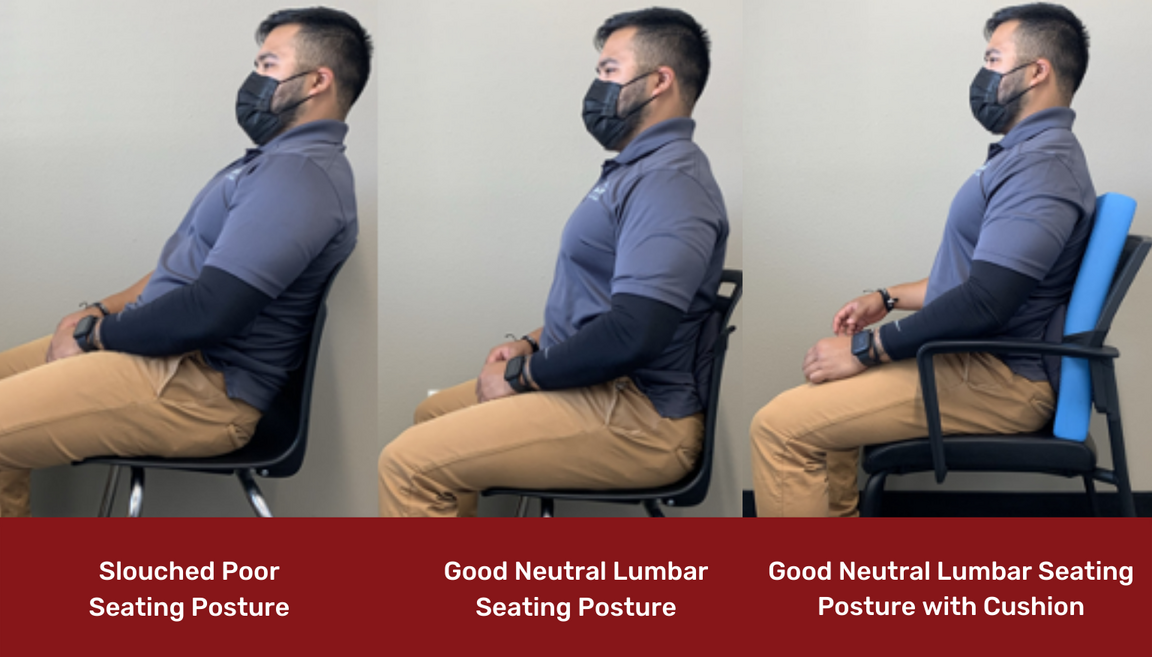
The first approach to relieving neck pain is to fix what perpetuates the problem on a daily basis: sitting. Below, we’ll take you through the steps toward developing good posture while sitting. It’s no secret that the average person doesn’t have perfect posture while sitting. Even while considering their sitting posture, most people sit up straight for 10 seconds thinking, ‘sit up straight,’ before slouching back down once their mind wanders to the next thought. The key to maintaining this posture throughout the day is the setup. Your chair and back support should be set up so that when you aren’t thinking about posture, you naturally relax into a neutral lumbar spine position.
While we treat many conditions through physical therapy, we recommend good nutritional practices so our patients can live their best lifestyle. Request an appointment today with one of our experienced and qualified physical therapists.
It is not possible to assume the proper cervical posture while you’re seated in a slouched lumbar position.
To get into a neutral lumbar spine position:
Sit tall and retract your head back so it rests over your shoulders.
If the seat is too deep to scoot your hips to the back rest:
If you’re unable to rest your feet on the floor after scooting back, use a footrest.
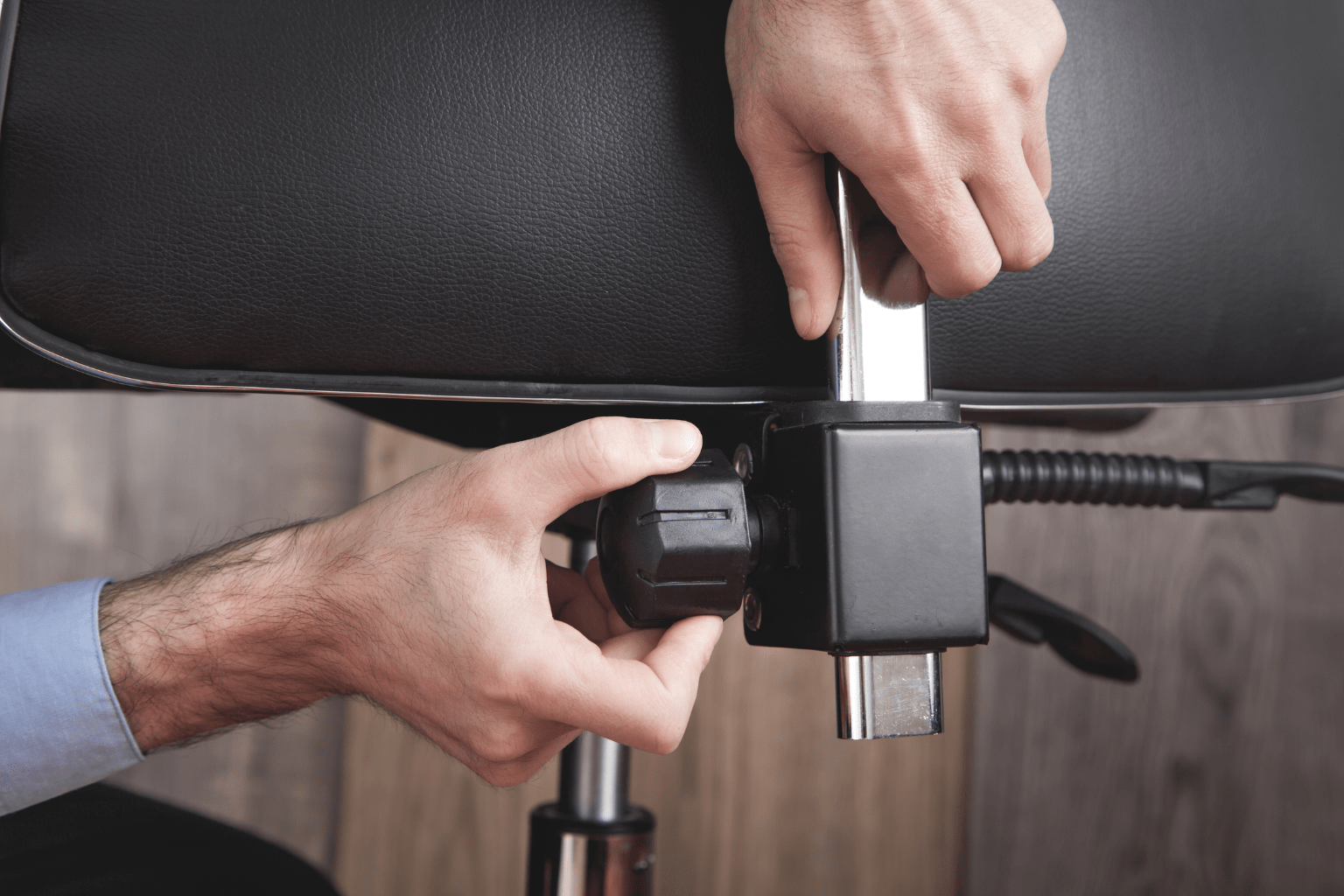
After you’ve developed a good posture while sitting in a chair, the next step is to set up your workspace or surrounding area to prevent neck pain and other issues, such as carpal tunnel syndrome. The most common situation is sitting while working at a desk with a computer. Here are some tips to correct your sitting posture and relieve neck pain in this situation.
If you’re already experiencing stiffness and soreness in your neck, the following exercises can gradually loosen and restore normal flexibility—the proper exercises prevent the involved tissues from becoming a continuous source of pain. As you begin these exercises, discomfort is expected when you’re completing the movements—you may be slightly sore. This will improve as your stiffness subsides with more repetitions over time. Your daily neck pains and strains will likely diminish as you continue these exercises and sitting with the proper posture. Do what you can tolerate and progress at your own pace.
Do each of the following exercises according to these frequencies:
The following exercises will benefit most people with neck pain while sitting, but they aren’t appropriate for everyone. If the exercises and pain increasingly worsen or become intolerable, seek qualified advice from a medical professional. Symptoms should not increase further down into the arm/hand, or progress into numbness and tingling. These exercises are also not recommended for neck pain as a result of recent trauma.
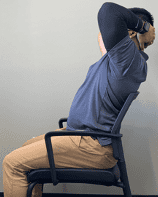
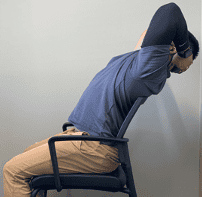
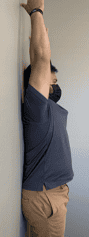
While doing the movement, avoid letting your head tilt up with your face toward the ceiling, and avoid tucking your chin toward your chest.
Be sure not to crunch forward beyond the starting position. You want to remain neutral to extend and not rounded forward. The exercise can be performed with arms crossed on your chest if you’re unable to place hands behind your head.



One of the best ways to relieve neck pain and other forms of pain is to schedule an appointment with a physical therapist. Our qualified and experienced physical therapists can help you develop a plan that suits your situation and needs. Request an appointment today at your nearest PRO~PT clinic to start your journey today.